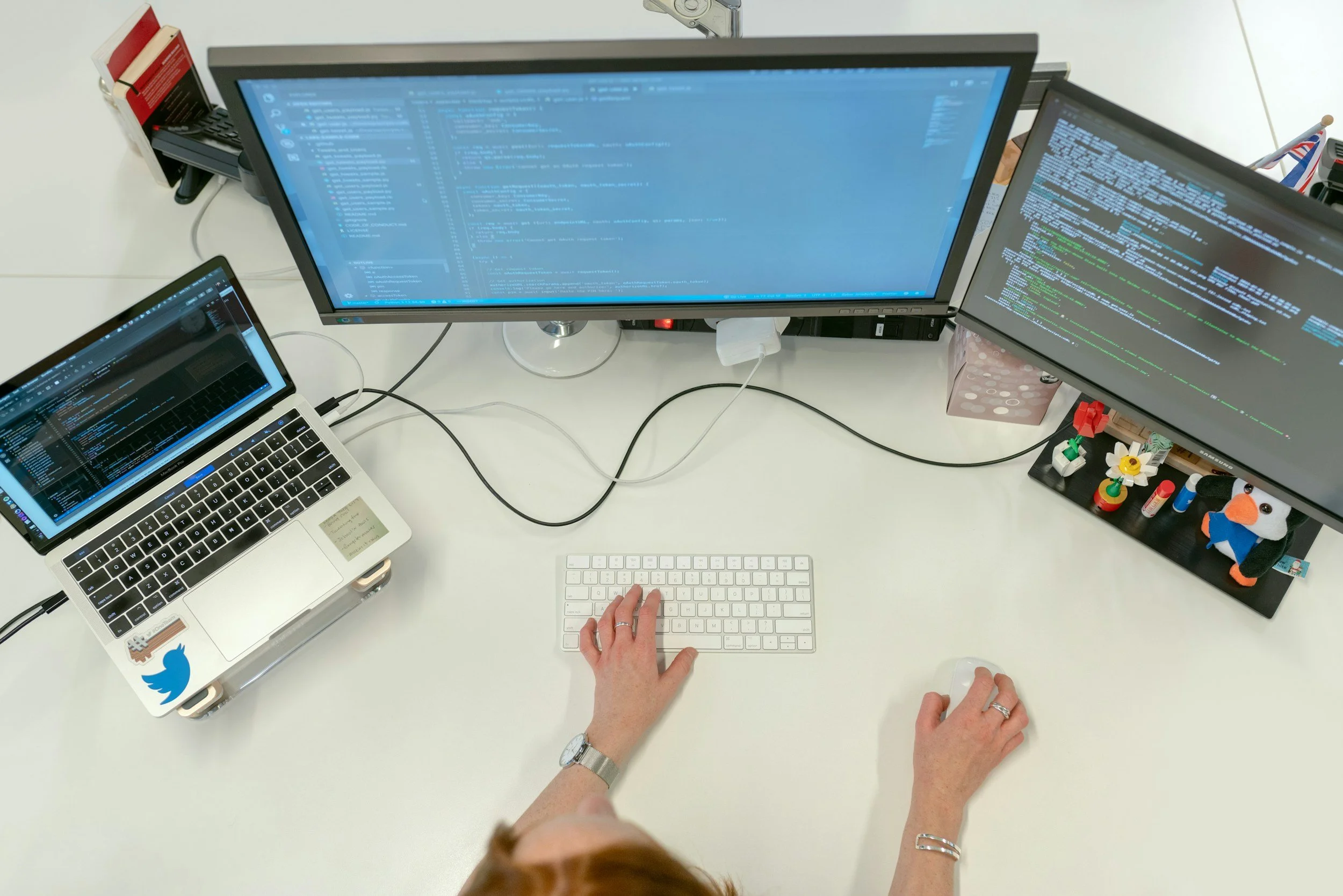
Have a think. When was the last time you did just one single thing for a prolonged period? Most of the time we pair our doings; Cook while listening to a dialogue-heavy podcast or audiobook, writing an email while talking on the phone, texting while watching tv, have several active tabs open on our computer (emails, direct messages with colleagues and the actual assignment you are working on - sound familiar?) - I’m sure you can come up with more.
We call it multitasking. But, biologically speaking multitasking isn’t actually possible. Reason being, the human brain cannot perform two attention-demanding tasks at the same time (automatic or low-attention pairing can sometimes work). Essentially, when we think we are multitasking, we are actually tricking ourselves.
So then what are we doing, you ask, if not multitasking? We are task-switching. The brain hops back and forth between different processes at lightning speed.
The prefrontal cortex (PFC) - located in the forehead - the part of the brain often referred to as the CEO - is in charge of planning, focus, and decision-making. When you attempt to handle two cognitive tasks at once, the PFC hits a bottleneck. So it starts goal-shifting, actively deciding to stop task A in order to switch to task B. During this time, the brain deactivates the known ‘rules’ for task A and immediately retrieves the ‘rules’ connected to task B. And while these shifts happen in milliseconds, they require significant energy. In neuroscience, the friction caused by this transition is called switch costs. Because of these costs, you perform both tasks slower and with more errors than if you had finished them one at a time.
When you constantly bombard your brain with parallel inputs, you alter your brain chemistry and structure over time. Task-switching all day keeps your nervous system in a state of low-grade, chronic stress. As we established above, task-switching requires significant energy, so, over time, this drains you, and significantly accelerates mental fatigue and burnout.
And then there’s the dopamine addiction, which especially applies to those with a heavy use of media/tech (which, as far as I can tell, is pretty much everyone at this stage). Every time you switch tabs or get a new notification, your brain rewards you with a tiny hit of dopamine ( the brain’s ‘reward’ chemical - it drives your motivation, desire, and focus by anticipating pleasure), due to the brain thriving on novelty. So your brain quickly learns to associate constant distraction with pleasure. It learns that changing tasks brings instant rewards, so it actively fights your attempts to stay focused on just one thing. This in turn makes your mind constantly restless, making it incredibly hard to dive deep or focus on one thing for more than a few minutes
Another area that especially effects the heavy media/tech users is the working memory (your brain’s temporary notepad). With task-switching, the brain loses its ability to distinguish between important data and environmental noise, so it becomes much harder to organise information and commit it to long-term memory.
That was a lot of bad news all at once. Fortunately, there is good news to be found here.
Your brain is neuroplastic, which means it adapts to how you use it. If you have trained your brain to be fragmented, you can retrain it to be focused. The antidote is single-tasking. E.g. intentionally closing extra tabs, silencing notifications, leaving the phone out of the bathroom (and out of the bedroom!), and finishing one project before moving to the next.
While single-tasking sounds simple, it’s a good habit that needs to replace a bad one. This can take time. The first step to any change, however, is awareness;
Start by noticing just how much you rely on task-switching in your everyday life.
Write it down.
Circle one or two areas you would like to change.
Commit to the change.
Consider involving your partner / colleague / friend, so they can keep you accountable.
As time goes by, consider keeping a diary where you write down noticeable differences in your focus, attention span and efficiency.
If you find the whole thing overwhelming and would like to look into ways I might be able to help you tidy up your overwhelm, please feel free to reach out any time.