From Beavis and Butt-Head to Smartphones: The Evolution of the Zoned-Out Teenager
Last week I was sat in the waiting room of Optimal Dental Health in Marylebone, London. Across from me was a mother with her teenage son - both deeply immersed in their telephones. The young man’s name was called and he reacted by standing up in surprise, looking from his phone to his mum to the woman who called his name while uttering in pure stoner fashion ‘Oh, I didn’t realise I had an appointment today!’, to which his mother replied ‘Why on earth did you think we were here?!’. The dentist smiled, the receptionists smiled and inside I was holding back laughter as this young man reminded me so much of a young man I love very much, who could easily have pulled the exact same stunt and used the same I’m-completely-zoned-out tone of voice while doing so (for those who grew up in the 90’s think: the stoner genre of Beavis and Butt-head, Dumb and Dumber, and Waynes world).
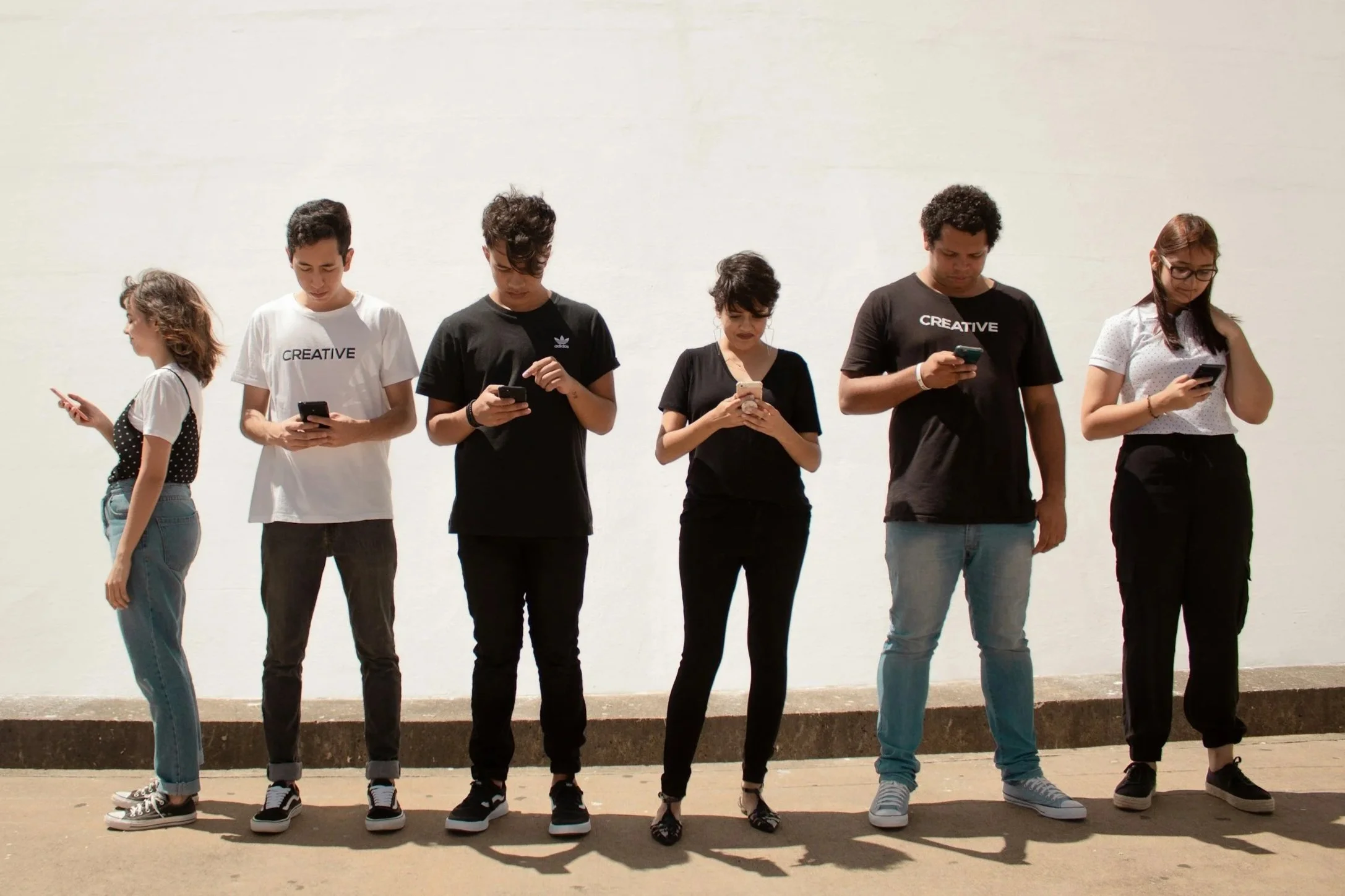
The above experience has turned out to be a real conversation starter over this past week. I have spoken to several parents about their teenagers and the way in which this generation ‘zones out’. We have discussed whether we did the same or whether this is a trait that seems to apply to the current youth. Slightly biased all parents so far have proclaimed that they were more ‘on it’ as teenagers - a handful, no doubt, but more present. Personally that’s how I recall my teenage self; A handful, but 'there’ (and deeply lonely, but that’s a different story for a different post).
Concluding that this is a current youth trait of our times, the conversations then went on to ask the question: What are they doing differently? And the answer was the same regardless of who I spoke to: Screens.
Ah. Screens. One of the very hot subjects in this world of ours. And, as it happens, one of the subjects I am most passionate about.
They started as something we could gather around and share as an experience. There were few channels and little choice set at specific times, demanding the viewer schedule their life around their favourite TV show so as not to miss it. With this strategy came the ‘water-cooler effect’; the cultural phenomenon where everyone watched the same thing in the evening and then spoke about it the following day at work or in school.
In the mid 90’s I was the first in my class to get a mobile phone - I believe I was 14 years old at the time. A so-called dumb phone (the only kind there was). The only thing it was capable of was phone calls. Having a phone wasn’t cool. Most adults didn’t have mobiles yet, but I did. I’m sure it was a hot topic amongst the parents in the class. The reason I got the phone was because no one was able to get through on our landline due to my phone addiction, termed ‘Telefonitis’ in Danish. I could speak for hours with my girlfriends, essentially making it impossible for anyone else in the household to communicate with the outside world. So, instead, I got my own phone with very clear instructions: I could no longer use the landline and had to pay my own telephone bill if it went above 200 DKK (the equivalent of roughly £25). Frankly, a rather genius solution the grown-ups in the household came up with. Sadly, though, my friends were not allowed to ring my mobile phone (it was expensive to call one such - roughly 20p a minute, as far as I recall) and it cost a fortune for me to ring them (it cost about 45-55p a minute to ring a landline). I recall the first few phone bills being excrutiatingly high, but how I dealt with that I don’t remember. With time, thankfully, the tariffs got cheaper and more and more people got mobile phones, but those early days were brutal for a young girl with a phone addiction!
When I studied to become a teacher in the mid 00’s, I did a project with one of my fellow students that focused on media. More specifically it focused on equipping children to decipher the reality television they were exposed to (Robinson, if anyone remembers that show). I specifically recall our focus on the claim that the contestants would ‘just be themselves’ on the island. Because how can you be yourself, if you are surrounded by cameras non-stop. Food for thought in ano 2026, where I believe this is very much the case for most people (another story for another post).
Fast forward to today. Landlines have vanished. Mobile phones have become the extension of most arms and cover most functions needed in everyday life. Streaming has more or less taken over the television industry. Devices are everywhere and we have never had more options or opportunities.
They allow us to text, call, or video chat with friends, family, and colleagues anywhere in the world instantly.
They connect people with niche interests, rare medical conditions, or shared goals, providing support groups that might not exist locally.
They give us immediate access to emergency services, roadside help, and safety tracking features like GPS location sharing.
They provide instant access to the sum of human knowledge through search engines, online courses, and free educational platforms.
They offer real-time translation tools that make traveling and cross-cultural communication seamless.
They host interactive apps for learning everything from coding and music to cooking and financial literacy.
They manage our lives through digital calendars, smart reminders, and syncable to-do lists.
They enable working and studying from anywhere, reducing commute times and improving work-life balance for millions.
They handle banking, grocery shopping, and navigation in seconds, saving hours of physical errand-running every week.
They monitor our heart rates, sleep patterns, daily steps, and chronic conditions to help us make better lifestyle choices.
They provide screen readers, voice controls, and hearing aid compatibility, giving people with disabilities greater independence.
They allow patients to consult with doctors and therapists remotely, making healthcare accessible to rural or housebound individuals.
The list goes on..
Tech is amazing! All of the above is absolutely fascinating and for some people fundamental to their existence in this world. However. And this is a big HOWEVER.
They are taking over our focus, our ability to connect, our capacity for deep, uninterrupted thought, our mental well-being, our capacity for original, creative thinking, and our ability to just be present in the moment.
Some would say that devices are making us dumber. They make us zone out from our real lives. And this brings us to the human brain.
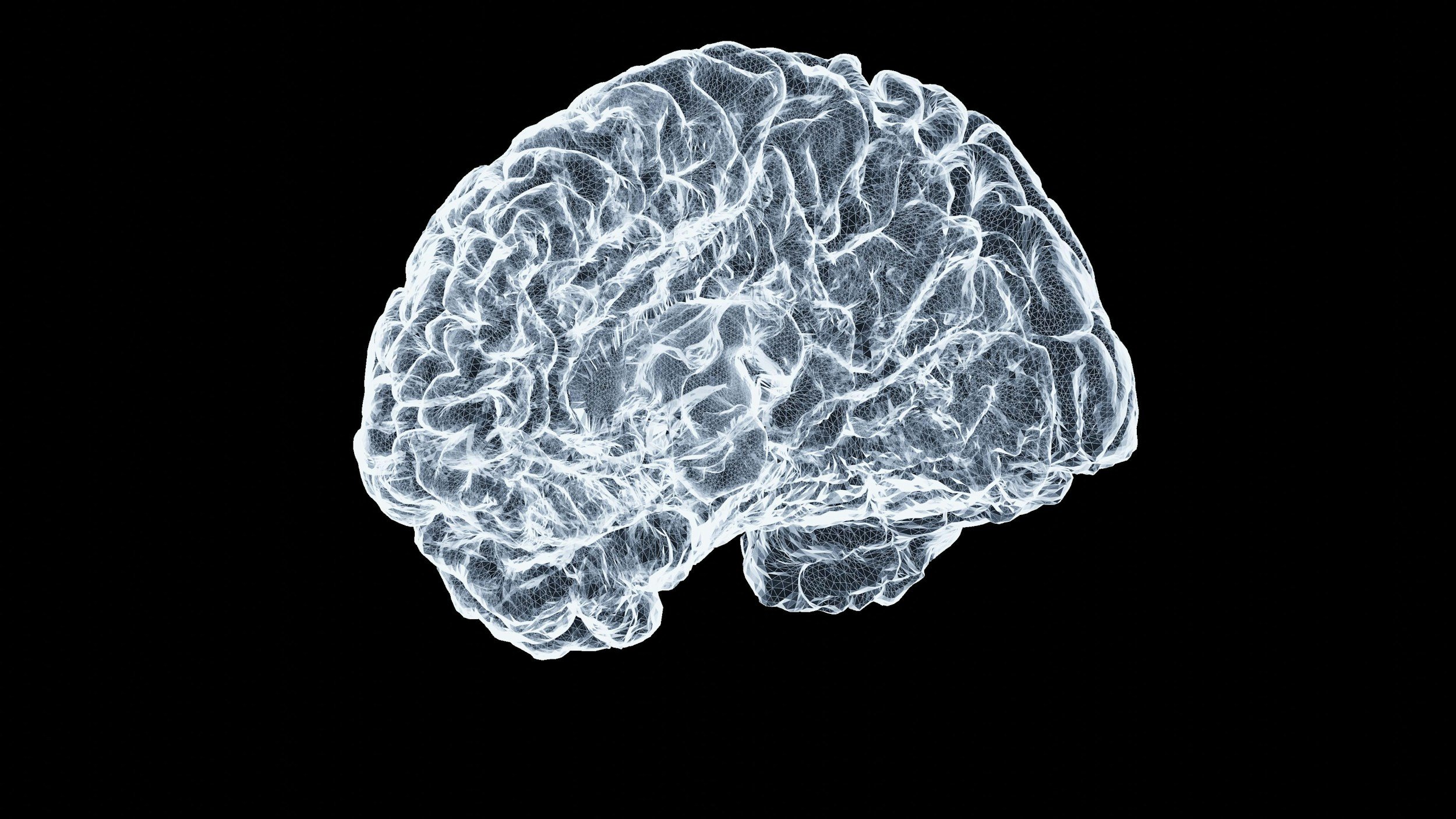
The human brain always looks for the easiest way to get things done. It likes to save energy, as it is our most hungry organ (uses roughly 20-30% of our energy despite taking up only 2% of your body weight!). So if a device can do something for the brain, the brain will consider it a good thing, use it, and spend the energy elsewhere. However, the brain is a muscle that needs to be used in order to not get weak, and it consists of different systems and networks that all need exercise and all have specific jobs. To name but a few;
The prefrontal cortex (PFC): Your CEO. Manages your focus, forethought, executive function and short term memory.
The Amygdala and Limbic areas: Responsible for emotional processing and emotional memory.
The Parietal lobe: Conquers spatial awareness, distinguishes left from right. This is where maths and reading is dealt with.
The Default Mode Network (DMN): Daydreaming, reflection, memories, creativity, processing of emotions.
The Central Executive Network (CEN): The Boss. Turns on when you need to focus, resolve challenges and make decisions.
These systems and networks above are only a few of those that form the brain. But it is evident, from just these 5 examples, how screens become a liability for this, our most complex and very important organ; our brain! Just like with any muscle, if we don’t use it, it gets weak! And if we train our muscles the wrong way, it creates havoc in the body.
Let me give you a few examples:
Constantly switching between apps and tabs overloads the PFC, which weakens your ability to resist impulses, control your screen time, and focus deeply on non-digital tasks.
Ping notifications, breaking news and events that cause FOMO (fear of missing out) activate the amygdala directly. This keeps your limbic system in a state of low-grade alert, causing digital stress and chronic restlessness.
When you stare intently at a flat, two-dimensional screen for hours, your physical and spatial attention narrows dramatically. The parietal lobe disengages from the real world, which is why people completely lose their sense of posture, time, and immediate surroundings when absorbed in a phone.
When you are constantly on a screen instead of allowing yourself to be bored (remember what that was like as a child?), the screen takes over the DMN’s time which can cause challenges for your deep creativity or your ability to process difficult emotions. It turns out being bored is important!
And as for the CEN, the constant pings and push notifications from our devices causes it to get interrupted. Every time your phone vibrates your CEN is forced to switch focus which eventually causes drained mental energy.
Devices are here to stay. There’s no way around it. So at this point it’s about finding a way to live with them that maximises the rewards they come with and diminish the downfalls. Because frankly, the good news is that we are more connected than ever before yet the bad news is that we are less present with these connections and added to that, quite possibly, getting dumber by the minute.
A note on brain development in young adults:
Different parts of the brain develop at different times. According to Dr. Daniel Amen, American psychiatrist and founder of Amen Clinics, the PFC doesn’t fully develop til young women are in their mid 20’s and young men are in their late 20’s. So these young brains are particularly sensitive to overload from constantly being faced with ‘multitasking’ from devices (as per the example above).
He believes that the constant attention-switching makes the brain highly inefficient and can actually mimic or worsen ADHD symptoms.
I am in no way anti-tech. As we established above, devices come with a lot of good news. Sadly they also come with devastatingly bad news and they specifically hit an area that is very close to my heart: relationships.
Kids are zoning out. Parents aren’t present and deep connections are at risk of being lost.
We need to regain control. And this comes with what many believe to be boring and mundane clichés:
Lifestyle adjustments
Healthy screen habits
Doing more of what helps our brains
Doing less of what hurts our brains
Clichés become clichés because they start out as brilliant, highly accurate truths that get used so frequently they eventually lose their original power. It doesn’t make them less brilliant or accurate though.
This is where we start.
We don't need to throw our smartphones into the Thames. We just need to stop letting them be the default setting for every spare second of our lives. The next time you find yourself with a free minute (whether you're sitting in a waiting room, riding the Tube, or waiting for the kettle to boil) challenge yourself to just be. Let your mind wander. Allow yourself to be bored. Your Default Mode Network will thank you for it, and you might just notice something beautiful happening in the room around you.
After all, life is happening right here in the present - not behind a piece of glass.
Finding that sweet spot between staying digitally connected and remaining mentally present isn't easy, but it is possible. Whether you are looking to transform your own digital habits, help your family log off, or equip your team at work to beat digital burnout and reclaim their focus, I’m here to help.
Feel free to reach out to explore how we can work together to create healthy, sustainable screen habits for you, your family, your team or your employees. Let’s get our focus back.